Fall-Sown Flowers for Early Spring Blooms: Growing Cold-Hardy Annuals and Perennials
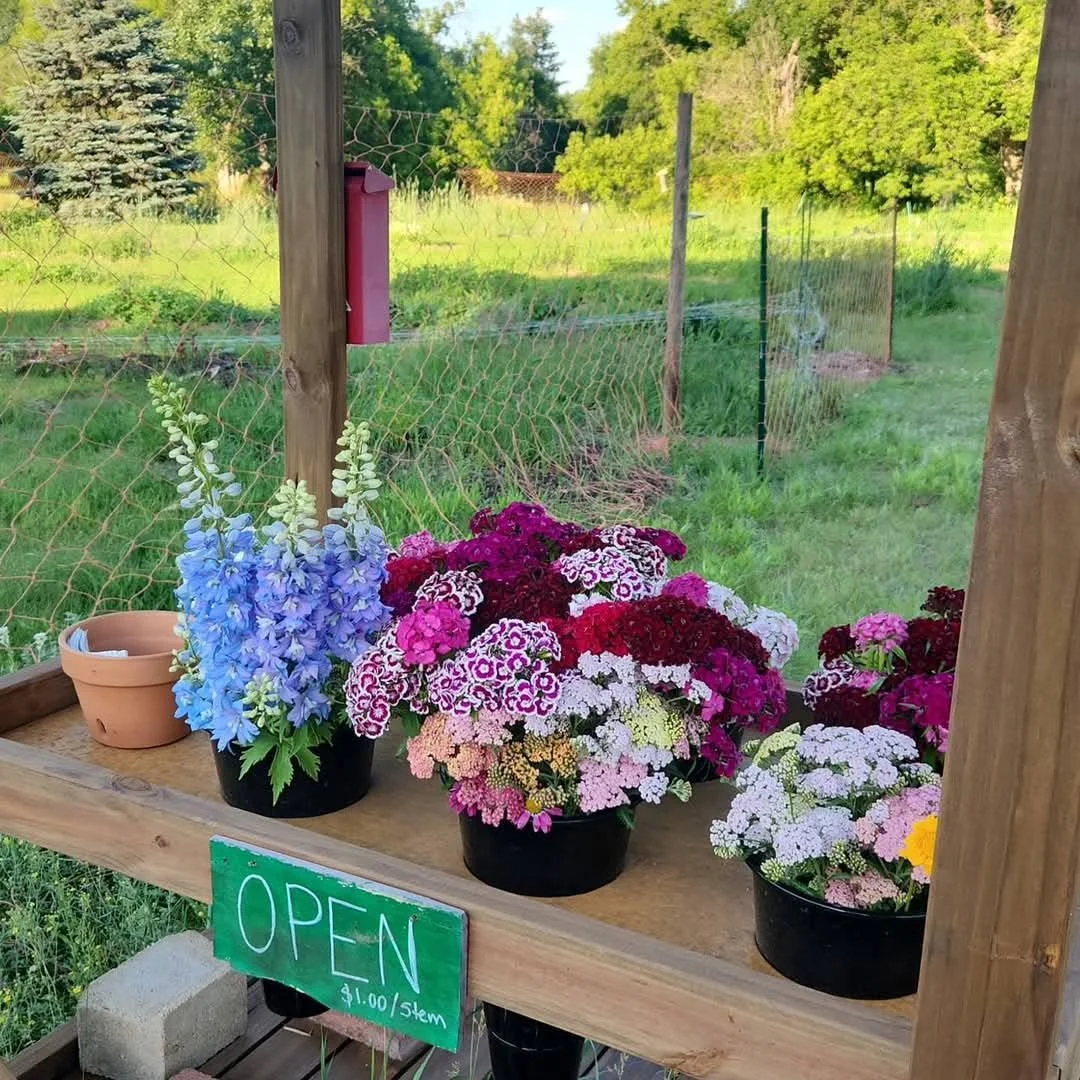
Want flowers blooming earlier in spring? Fall-sowing cold-hardy annuals and planting perennials in autumn can help flower gardeners—and flower farmers—get a jump start on the growing season.
Here at The Romestead Flower Farm, we're always thinking ahead to the next season. While summer is filled with colorful blooms and visitors enjoying the you-pick flower fields, we're already thinking about what comes next.
One of the most exciting ways to extend the flower-growing season is to plant certain cold-tolerant annuals and perennials in the fall. Instead of waiting until spring to start every flower crop, some plants can be sown or planted before winter, allowing them to establish themselves and be ready to grow as soon as spring arrives.
For gardeners in cold climates like Minnesota, this strategy takes a little planning and experimentation—but the potential reward is an earlier start to the flower season.
What Are Fall-Sown Flowers?
Fall-sown flowers are flower crops that are planted or seeded in autumn with the intention of growing through—or surviving—the winter and continuing their growth in spring.
This technique is especially useful for hardy annuals, sometimes called cool flowers. Unlike warm-season annuals such as zinnias, cosmos, and sunflowers, hardy annuals are naturally more tolerant of cool temperatures and light frosts.
Depending on the variety and your growing zone, some hardy annuals can be:
Direct sown in the garden in fall
Started in containers and overwintered
Planted out in late summer or fall
Grown under row cover or other winter protection
Sown in late winter using techniques such as winter sowing
The goal is to have plants that are already established—or seeds that are ready to germinate—when spring temperatures begin to rise.
Experienced flower growers, including Lisa Mason Ziegler of The Gardener's Workshop, have championed the benefits of growing cool-season hardy annuals. These flowers can tolerate conditions that would damage warm-season crops and can provide some of the earliest annual blooms of the growing season.
For flower farmers, that can be especially valuable because hardy annuals can help fill the gap between the first spring bulbs and the arrival of larger summer crops.
Why Sow Flowers in the Fall?
The biggest advantage of fall sowing is simple: an earlier start in spring.
When hardy annuals are able to establish themselves before winter, they don't have to start completely from scratch when spring arrives. Once temperatures and daylight conditions become favorable, established plants can quickly resume growth.
This can lead to:
Earlier spring flowers
A longer flower harvest season
Larger, more established plants
Stronger root systems
Less spring planting work
A wider range of flowers available early in the season
For a you-pick flower farm, those early blooms are particularly exciting.
The period between the first spring flowers and the main summer flower season can feel surprisingly long. Fall-sown hardy annuals can help bridge that gap, giving visitors something beautiful to enjoy while warm-season crops are still getting established.
At The Romestead Flower Farm, we're always looking for ways to extend the season and create more opportunities for our community to enjoy locally grown flowers.
Fall sowing is one more tool that can help us do just that.
Best Cold-Hardy Annual Flowers to Fall Sow
Not every flower can survive a Minnesota winter, but many hardy annuals are excellent candidates for fall sowing in the right climate.
Here are some of the most popular flowers to consider.
Larkspur
Larkspur is a classic cool-season flower and a favorite among many flower farmers.
The tall flower spikes add height and movement to bouquets and flower arrangements, and the plants are available in beautiful shades of blue, purple, pink, and white.
Larkspur is particularly well suited to fall sowing because it benefits from exposure to cold temperatures and can get an early start once spring arrives.
For gardeners interested in growing early spring cut flowers, larkspur is one of the first varieties worth researching.
Bachelor Buttons
Bachelor buttons are easy to grow, colorful, and excellent for pollinators.
Although the classic color is blue, modern varieties are available in shades of pink, lavender, white, and burgundy.
They are also useful as cut flowers, making them a practical choice for both home gardens and flower farms.
Poppies
Poppies are another excellent candidate for fall sowing.
Many poppies prefer to be directly sown where they will grow because their delicate root systems don't always appreciate being transplanted.
Fall sowing gives seeds the opportunity to experience natural winter conditions and emerge early in spring.
One important tip: don't cover poppy seeds too deeply. Many varieties need light to germinate, so follow the specific instructions for the variety you're growing.
Nigella
Also known as Love-in-a-Mist, nigella is prized for both its flowers and its unusual seed pods.
The delicate blooms are beautiful in bouquets, while the interesting seed pods add texture and visual interest to floral arrangements.
Nigella is another cool-season flower that can be incorporated into a succession planting strategy for an earlier spring harvest.
Bells of Ireland
Bells of Ireland are a unique addition to the cutting garden.
Their tall green flower spikes add structure and height to bouquets and can be especially useful for flower farmers who want to offer something different from traditional blooms.
They are commonly grown as a cool-season crop and may benefit from fall sowing or early spring planting, depending on your climate.
Calendula
Calendula is a cheerful, productive flower that can tolerate cool conditions.
It is useful as both a cut flower and a pollinator-friendly garden plant, and its bright blooms can bring much-needed color to the garden early in the season.
Snapdragons
Snapdragons are another important cool-season flower for cutting gardens.
However, their ability to overwinter successfully varies significantly by climate and variety. In colder areas such as Minnesota, they may require additional protection or may be better grown as an early spring transplant.
For gardeners experimenting with overwintering snapdragons, a small test planting can be a great way to determine what works in your specific microclimate.
What Are the Best Hardy Annuals for Minnesota?
This is where things get a little more complicated.
A flower described as a "hardy annual" may be perfectly capable of surviving winter in one region but fail completely in another.
Minnesota gardeners have to consider:
USDA growing zone
Local microclimate
Winter temperatures
Snow cover
Wind exposure
Soil drainage
Timing of fall planting
Variety selection
Winter protection
A plant that successfully overwinters in Virginia or the Pacific Northwest may not survive an exposed Minnesota winter.
That's why we believe experimentation is an important part of growing.
Try a small planting.
Test several varieties.
Keep notes.
See what survives your particular winter.
Over time, you'll develop your own list of the best cold-hardy flowers for your Minnesota garden or flower farm.
When Should You Plant Fall-Sown Flowers?
Timing is one of the most important parts of successful fall sowing.
The goal is generally to give hardy annuals enough time to germinate and establish themselves before winter without allowing them to become excessively large and vulnerable to winter damage.
Many experienced growers recommend timing fall sowing based on your average first frost date.
For some hardy annuals, this may mean planting approximately 6–8 weeks before your first expected fall frost, although the ideal timing depends on the specific crop and your growing zone.
In Minnesota, this window can be especially challenging because fall weather can shift quickly from warm to freezing.
Rather than relying solely on the calendar, pay attention to your plants and the weather.
The goal is often to have healthy, established plants—not huge plants putting on lots of tender new growth—going into winter.
Always check the growing recommendations for the specific flower variety you're planting.
Fall Planting vs. Winter Sowing
It's important to understand that fall sowing and winter sowing are not exactly the same thing.
With fall sowing, seeds are generally planted early enough in autumn that they have the opportunity to germinate and establish before winter.
With winter sowing, seeds are often exposed to natural winter conditions and remain dormant until environmental conditions are right for germination.
Winter sowing can be especially useful for gardeners who don't have a greenhouse or indoor seed-starting space.
Both techniques take advantage of the natural cold period that many hardy plants can tolerate.
The best method depends on the flower variety, your climate, and your growing setup.
Fall-Planted Perennials: Investing in Future Blooms
Fall is also an excellent time to plant perennial flowers.
The strategy with perennials is somewhat different from overwintering hardy annuals.
Instead of expecting a massive flush of flowers the following spring, the goal is to give perennial plants time to establish strong root systems before the next growing season.
In many climates, the soil remains relatively warm after air temperatures begin to cool. This creates an opportunity for roots to continue developing even as above-ground growth slows down.
By spring, a well-established perennial can be better prepared to begin active growth.
Some perennials may flower the following year, while others need several seasons to reach their full size and flowering potential.
For a flower farm, planting perennials is an investment in the future.
Once established, perennial crops can become dependable parts of the farm's annual bloom calendar, helping provide flowers year after year with less replanting than annual crops require.
How to Protect Fall-Sown Flowers Over Winter
Winter protection can make a significant difference, especially in colder climates.
One of the most commonly used tools among flower growers is floating row cover.
Row cover can help protect plants from:
Cold temperatures
Drying winter winds
Temperature fluctuations
Wildlife
Early spring frost
It can also help warm plants earlier in spring, potentially encouraging faster growth and earlier flowering.
However, winter protection is not a substitute for choosing the right crop.
A plant that isn't cold-hardy enough for your climate may still fail despite being covered.
Good drainage is also critical. Cold, wet soil can be just as damaging as low temperatures for some plants.
When selecting a location for overwintering crops, consider choosing a site with:
Good drainage
Protection from prevailing winds
Adequate sunlight
Healthy soil
Easy access for spring maintenance
Prepare Your Flower Beds in the Fall
One of the best things you can do for early spring flowers is to prepare your garden beds before winter arrives.
The Gardener's Workshop emphasizes the importance of having beds ready for early-season planting. In cold climates, spring can arrive before the soil is ready to work.
When the ground is still frozen, muddy, or too wet to cultivate, having your beds prepared ahead of time can give you a significant advantage.
Fall is a great time to:
Remove weeds
Add compost or appropriate soil amendments
Prepare planting beds
Install irrigation infrastructure
Plan crop locations
Sow hardy annuals
Plant perennial flowers
Install winter protection
A little preparation in October can save a lot of frustration in April.
The Risks of Overwintering Flowers in Minnesota
While fall sowing can be incredibly rewarding, it isn't foolproof.
Even experienced flower farmers can lose overwintered crops.
Minnesota winters can bring extreme cold, strong winds, rapid temperature changes, ice, and heavy snow. Wildlife can also cause damage to overwintering plants.
The biggest lesson is to avoid relying on one method or one crop.
A successful flower farm uses multiple strategies.
Some flowers may be fall sown.
Others may be started indoors in late winter.
Some may be planted as early spring transplants.
Warm-season crops will wait for the soil to warm up.
By diversifying your approach, you reduce the risk of losing your entire early-season flower crop to one difficult winter.
Why We Love the Idea of Growing Flowers Before Spring
There is something magical about a flower field that begins waking up after a long Minnesota winter.
Before the zinnias are blooming.
Before the dahlias are planted.
Before the sunflowers begin reaching for the sky.
There can be larkspur swaying in the breeze.
Poppies opening their delicate petals.
Nigella adding its airy texture.
Cool-season flowers filling the garden with some of the first colors of the new growing season.
That is the beauty of planning ahead.
At The Romestead Flower Farm, we're always thinking about how we can make the flower season longer, more colorful, and more enjoyable for our community.
Growing cold-hardy annuals and establishing perennial flowers in the fall is one way we're exploring how to bring the flower season to life just a little bit earlier.
So when the growing season starts winding down, don't think of fall as the end of the garden.
Think of it as the beginning of next year's flowers.
Because sometimes, the secret to an early spring bloom is planting it long before spring ever arrives.
Ready to Try Fall-Sown Flowers?
If you're interested in experimenting with fall-sown flowers, start small.
Choose a few varieties known for their cold tolerance, check your growing zone, and pay attention to your first expected frost date.
Try planting a small test bed rather than committing your entire garden.
Most importantly, keep track of what works.
Every garden has its own microclimate, and every winter is different. The varieties that survive one year may struggle the next, while a flower you didn't expect to overwinter may surprise you.
That's part of the fun of growing flowers.
And who knows?
When spring finally arrives, you may find that while everyone else is waiting for the flower season to begin, your garden has already gotten a head start.
Happy growing!
The Romestead Flower Farm 🌱🌸
Sources & Further Reading
The information in this article is informed by growing practices and educational resources from experienced flower growers and horticultural organizations, including:
The Gardener's Workshop – Resources on cool-season flowers, hardy annuals, fall bed preparation, row cover, and early spring flower production.
Floret Flowers – Resources on fall-sown hardy annuals and extending the cut-flower season.
Royal Horticultural Society (RHS) – Guidance on autumn sowing and growing hardy annuals.
Growing recommendations vary by flower variety and climate. Always consult the seed packet or supplier's specific growing instructions and consider your local USDA hardiness zone and microclimate before attempting to overwinter plants.
