How We Grow: Our Eco-Friendly Flower Farming Practices
At The Romestead Flower Farm, our passion for flowers runs deep—but so does our love for the soil beneath them. When you step into our fields to pick your own bouquet, you're not just experiencing color and fragrance. You're stepping into an ecosystem built on mindful choices and a deep respect for the earth. Every flower you clip is the result of sustainable farming methods that prioritize health—of the soil, the environment, and ultimately, of you. In this article, we’d love to pull back the curtain and share the behind-the-scenes look at how we grow. From no-till soil practices to completely chemical-free cultivation and plastic-reducing seed-starting techniques, our farm is rooted in eco-friendly principles that shape everything we do.
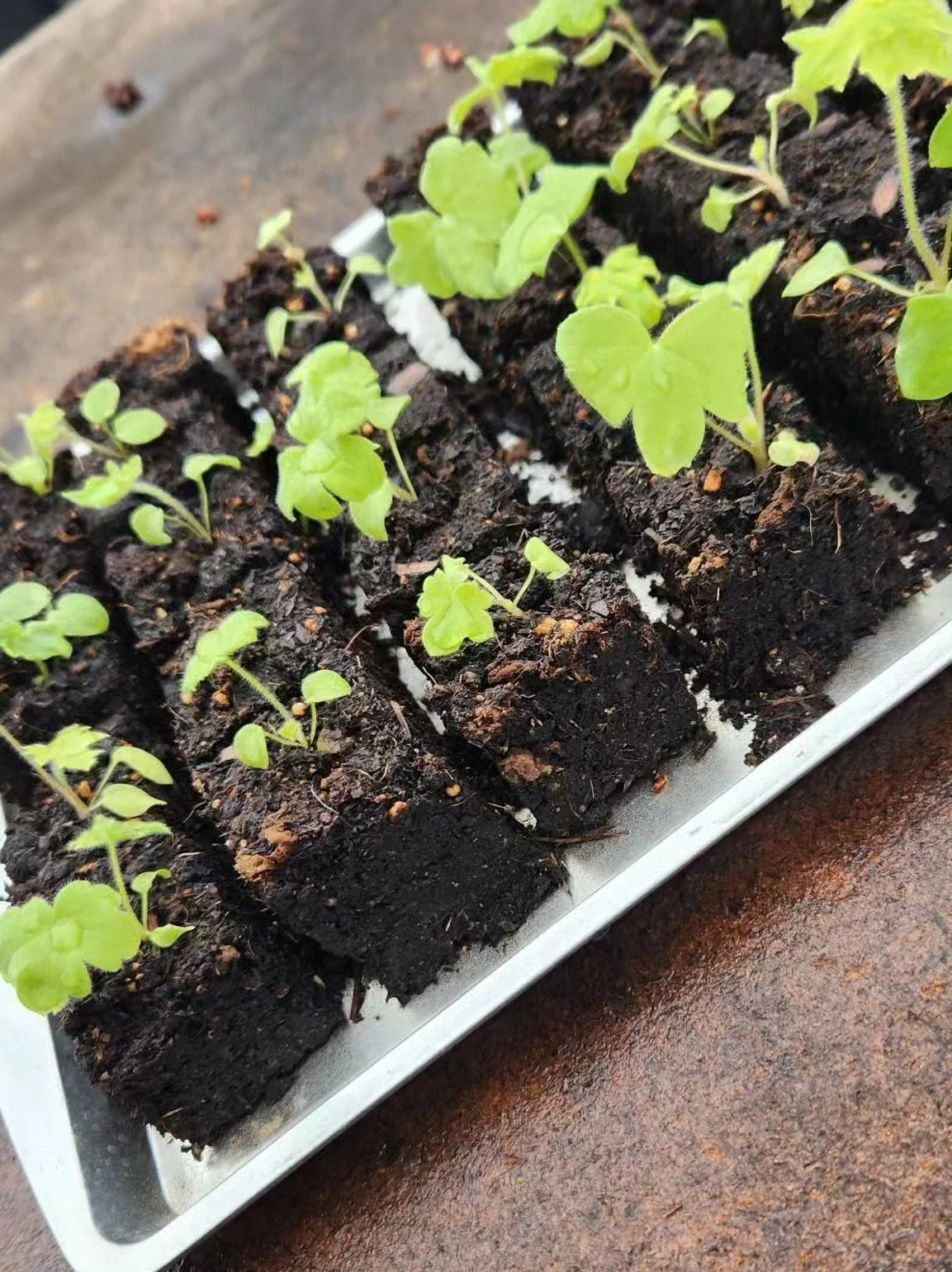
Soil block seed staring
Why Eco-Friendly Farming Matters
Before we dive into the specifics, let’s talk about why sustainable flower farming is so important.
Conventional agriculture—even in the floral industry—often relies on heavy tilling, synthetic fertilizers, pesticides, and plastics. While these methods may boost short-term yields, they degrade the health of our soils, contribute to water pollution, and create long-term problems for biodiversity and climate resilience.
At The Romestead Flower Farm, we believe beauty should never come at the expense of the planet. That’s why our growing practices are centered around harmony with nature, not control over it. We grow flowers the way nature intended: organically, gently, and regeneratively.
No-Till Farming: Letting the Soil Do the Work
Tilling, or turning the soil over with a tractor or plow, has long been a common farming practice—but it’s also one of the most destructive. Tilling breaks up the delicate soil structure, disrupts microbial life, and releases stored carbon into the atmosphere. It also leaves the soil vulnerable to erosion and weeds.
Our solution? We don’t till. Ever.
Instead, we use a no-till system that preserves soil health and allows natural processes to thrive.
Benefits of No-Till Flower Farming:
Protects Soil Structure: Earthworms, fungi, and beneficial bacteria can flourish without being disturbed.
Retains Moisture: Mulch and organic matter help the soil stay moist longer, reducing our need for irrigation.
Improves Soil Fertility: Organic residues break down slowly, building rich, living soil over time.
Reduces Weeds: A thick layer of compost or mulch smothers weeds naturally—no herbicides needed.
Stores Carbon: No-till farming is a powerful way to keep carbon in the soil and out of the atmosphere.
Instead of ripping up the ground, we build permanent flower beds, layering compost on top of the soil and planting directly into it. Think of it as "lasagna gardening" on a field scale—gentle, nourishing, and low impact.
Zero Chemicals, All the Time
One of the most common questions we get is: "What do you spray on your flowers?"
The answer is simple: nothing.
We don’t use:
Synthetic pesticides
Herbicides
Fungicides
Chemical fertilizers
Soil sterilizers
Ever.
Why We Avoid Chemicals
Chemical inputs disrupt the natural balance of the farm. They kill not just pests, but beneficial insects. They leach into groundwater. And they’re often unnecessary when you work with nature instead of against it.
Instead, we rely on time-tested organic practices:
Crop rotation: Prevents disease buildup and keeps soil nutrients balanced.
Companion planting: Encourages natural pest control and biodiversity.
Compost and worm castings: Provide all the nutrients our flowers need, naturally.
Physical barriers: Like row covers to deter insect pests without harming pollinators.
Observation and balance: When pests show up, we identify the cause and correct it holistically rather than reach for a spray bottle.
We like to say: if we wouldn’t feel safe picking it barefoot or handing it to a child, we don’t grow it that way.
Soil Blocking: Starting Seeds Without Plastic
Plastic is everywhere in modern farming—from seed trays to pots to irrigation systems. But we’ve found an elegant, earth-friendly alternative that eliminates one major source of plastic waste: soil blocking.
What is Soil Blocking?
Soil blocking is a method of starting seeds without plastic trays or pots. Instead, we use a simple hand tool to compress a special mix of soil into small, firm blocks. Each block has a tiny indentation for the seed. No containers required!
As the seed germinates, its roots are air-pruned (rather than circling like in pots), creating stronger transplants with minimal root disturbance.
Benefits of Soil Blocking:
No plastic waste: Completely reusable and biodegradable system.
Healthier seedlings: Roots grow straight and strong, with no transplant shock.
Better airflow: Reduces the risk of damping-off disease.
Space-efficient: Blocks can be packed tightly in trays or on benches.
We start hundreds of flowers this way each season—everything from zinnias and snapdragons to cosmos and celosia. It’s a bit more labor-intensive, but it’s worth it for both the plant quality and the environmental payoff.
Pollinator Paradise
Another key part of our eco-friendly philosophy is creating a haven for pollinators. Bees, butterflies, moths, and even hummingbirds are essential partners in flower farming, and we do everything we can to support them.
Here’s how we keep our fields buzzing:
No sprays: Even organic pesticides can harm pollinators—we avoid them all.
Pollinator strips: We plant native wildflowers and herbs just for our winged friends.
Bloom succession: By staggering plantings, we ensure something is always in bloom.
Habitat preservation: We leave edges of the field wild and undisturbed to provide nesting areas.
Visitors often tell us that walking through our flower fields feels magical. That’s not just the flowers—it’s the life they attract.
Minimal Waste, Maximum Beauty
We also strive to be a low-waste operation in every part of the farm experience.
We compost all plant debris: Nothing goes to the landfill.
Reusable buckets and shears: We provide sanitized, reusable supplies for you-pick guests.
Eco-conscious signage and packaging: Our signs are made from wood and chalkboard; our bouquets are collected in paper cups, not plastic.
Dried flower preservation: Leftover blooms are dried and sold as everlasting arrangements, wreaths, or craft bundles.
We’re always learning and evolving. Each season brings new ways to reduce waste, improve efficiency, and do better by the land.
Farming With a Light Footprint
Sustainable flower farming isn’t just about flowers. It’s about stewarding the land in a way that keeps it healthy for generations to come.
At The Romestead Flower Farm, we treat our soil like the living organism it is. We honor the cycles of nature. And we grow flowers with the same care and reverence we hope you’ll feel when you walk our fields.
Here’s what we promise:
We’ll never compromise beauty for convenience.
We’ll keep improving our practices and reducing our impact.
We’ll always welcome you to experience the joy of flowers grown with heart.
Come See for Yourself
We love sharing our farming philosophy—but even more, we love sharing the experience of it. When you visit The Romestead Flower Farm, you're stepping into something bigger than a flower patch. You're supporting regenerative agriculture, pollinator protection, and a future where beauty and sustainability go hand in hand.
Next time you’re in the fields, feel free to ask us how we started that particular bloom, what compost mix we’re using, or what bugs we’ve seen this week. We’re always happy to talk plants, pollinators, and practices.
Because to us, growing flowers isn’t just about what you see in the bucket—it’s about the world beneath your feet and the choices we make to keep it thriving.
